


Low-particle emission. Future-proof design. OE quality.
The demands placed on modern braking systems are constantly evolving.
With the introduction of Euro7, the focus is expanding- for the first time - beyond traditional exhaust emissions to include particulate emissions generated by brake wear. For both vehicle manufacturers and the independent aftermarket, this means future brake discs will need to deliver not only reliability and strong performance, but also play a growing role in reducing brake dust.
As a manufacturer of brake components, we are therefore already developing solutions for the next generation of braking components.


Three technologies. One goal.
To stay flexibly and ready for the technological solutions adopted by vehicle manufacturers and the future requirements of the aftermarket, we are currently preparing for various coating and surface technologies:
Laser Metal Deposition
High-precision coating for demanding applications
With Laser Metal Deposition (LMD), a metallic—or metallurgically matched—coating material is applied to the brake disc surface using a laser.
These surface characteristics open up exciting possibilities for creating wear- and corrosion-resistant brake discs.
Cold Spray
Coating without conventional melting
In the cold spray process, coating particles are applied to the surface at very high speeds (resulting in minimal thermal stress on the base material).
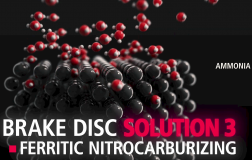
Ferritic Nitrocarburizing
Targeted surface modification
Ferritic nitrocarburizing alters the surface properties of the cast-iron material. The incorporation of nitrogen and carbon creates a hard, wear-resistant surface layer.
Why three technologies?
What ultimately matters is which technology will ultimately establish itself as the standard for each vehicle platform and application in the future.
Vehicle manufacturers are continuously advancing their braking systems, employing a variety of concepts regarding materials, coatings, and friction pairings.
We are therefore deliberately building in technological flexibility. Rather than committing to a single coating approach, we are developing multiple options.
OE quality as a development principle
An aftermarket brake disc must do more than simply fit geometrically; it must integrate as harmoniously as possible into the overall system comprising the vehicle, brake caliper, brake pad, and brake disc.
That is why, for decades, we have pursued a clear approach to brake disc development for decades:
OE quality is the benchmark for our brake discs.
We view material, geometry, design, and surface characteristics as an integrated system.
Focus on Euro7
Euro7 expands the scope to include particulate emissions caused by brake wear.
For the independent aftermarket, the specific requirements and verification procedures for the Euro 7 standard have yet to be precisely defined.
We are not waiting for the final definition of all requirements - we are developing solutions today.
In-house testing on a particulate dynamometer
Technology development requires measurable results.
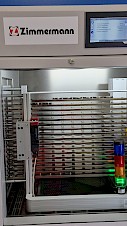
That is why we operate our own in-house particulate test dynamometer, where we analyze brake discs and pads under defined, reproducible conditions.
Tests conducted so far have yielded excellent results, confirming the validity of our chosen development path.


Proactive Development
Electric vehicles, hybrids, and heavier vehicles place new demands on braking systems. At the same time, corrosion resistance, service life, and the reduction of brake dust are becoming increasingly important.
We view this development as an opportunity.
Our diverse technological approaches lay the foundation for meeting varied vehicle and market requirements in a targeted and cost-effective manner.
The specific application will determine which technology is ultimately used.
Three technologies. In-house testing expertise. A clear commitment:
Brake discs for the future of the aftermarket.